Sunday, April 05, 2015

Periscope and science communication: Chris Hadfield leads the way

I really like how astronaut Chris Hadfield has been making waves using Twitter's new live video streaming app Periscope. His broadcasts are often science communication at their best as he answers questions about space flight and the space memorabilia he has around his house (exploding space shuttle bolt book ends anyone?). Oh and he plays some soothing guitar riffs too.


What I like most about these live broadcasts is not just the sense that I'm hanging out with the world's nicest guy but the way he deals with the (wide ranging!) science questions from the live audience. As he chats away looking straight down the camera lens, people pose tweet-like questions that they've typed on their phones, which then appear on screen and he answers speaking into the camera. 

His answers are always respectful of where the person is coming from (no knowledge deficit model of science communication here) and his explanations are clear and often fascinating. He's not shy of being provocative either - when asked by someone if the plans for Mars trips were fake he surprised me with his answer - "they're not fake but they're not real either - it's science fiction." Ouch. 

Tuesday, March 11, 2014

Top 3 Unusual Things Overheard at the Innovation Convention (Day 1)


The Innovation Convention 2014 in Brussels has brought together an inspiring and eclectic bunch of people from all over Europe. Here are a few of the more unusual things that I've heard on and off stage on Day One:


  1. "I met some extra-terrestrials on Saturday. There's a lot of them in Belgium and France" - explained the nice older lady who'd popped along for the "Are We Alone" session
  2. "I hate cucumbers" - revealed famous chef Elena Arzak when asked what smell she hated most in the world
  3. "Let's cut the tie" - urged Prezi co-founder Peter Arvai asking the audience to metaphorically cut their ties in half and use creativity to build exciting new businesses


I'm looking forward to hearing more today on Day Two...


Saturday, November 09, 2013

Large Hadron Collider cycling fun

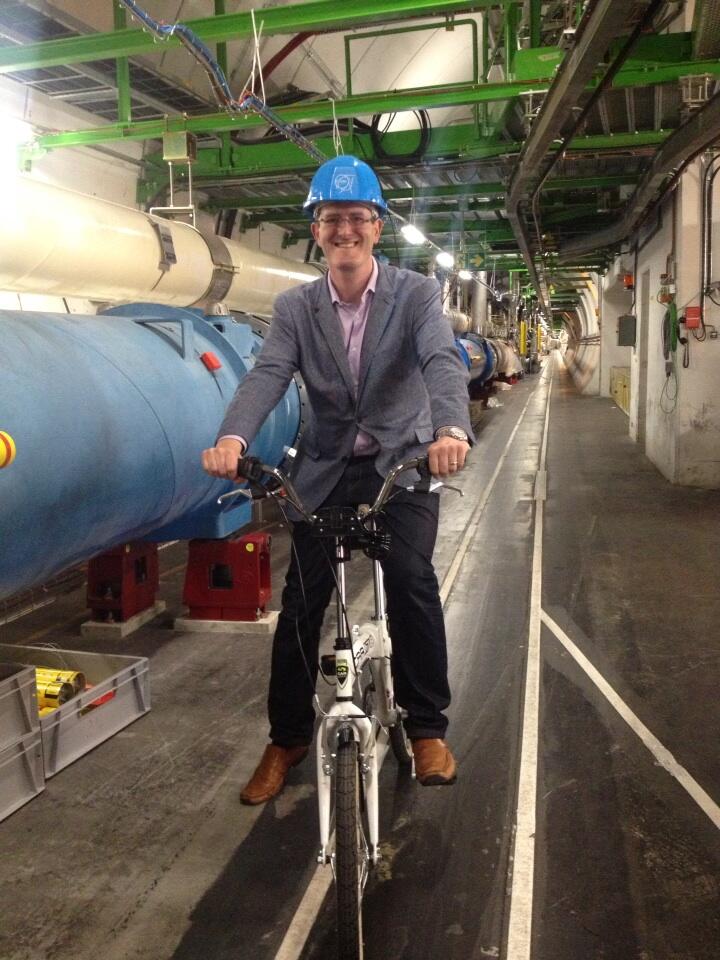
Cycling around the Large Hadron Collider recently was great fun - and I've uploaded the photo below to prove it!

Taking a break while filming for our Institute of Physics video project, I got a chance to pose for this photo underground at CERN right beside the LHC. Just one of the science communication I've been lucky enough to work on at creative communications agency Agtel! Now where is that elusive Higgs boson...


Saturday, January 05, 2013

Stargazing Live coming back to BBC soon, clouds gather in anticipation


I'm looking forward to Stargazing Live coming back soon. This is a science communication juggernaut in television terms, and episode one of this the third series will focus on Mars exploration. It all starts on Tuesday, 8 January 2013 on BBC Two. Here's the blurb from the official site:

Professor Brian Cox and Dara O Briain host three nights of stargazing and discussion, live from Jodrell Bank. Featuring guest experts and link-ups to observatories around the world.

There's a good reason those global link-ups are necessary - the pesky weather. If there's one thing astronomers in Ireland and the UK can be sure of, it's that it'll always be cloudy when something interesting is happening. So I'm sure clouds are already gathering in anticipation of raining on our astronomy parade. Hrmph.

Incidentally, our Northern Star science documentary (about the controversial discovery of pulsars) also has Jodrell Bank at its heart - you can watch the exciting opening sequence online on the Agtel site or hit play on the embedded video below...


Tuesday, September 20, 2011

FBD Insurance predicts fusion, bets it will go horribly wrong


I love it when hard science shows up in the weirdest and most unpredictable places. So I was delighted to read the updated "radioactivity exclusion" clause FBD insurance have added into my home insurance policy and that they sent me earlier today.

They must know something the rest of us don't if they've gone to the bother of excluding damage caused by:
"any weapon or device employing atomic or nuclear fission and/or fusion". 
In south county Dublin? Those scientists at ITER must be working harder than we thought...

Wednesday, September 07, 2011

RTÉ's science TV plans

There's a lively discussion about RTÉ's science TV plans over on The Frog Blog.

There are some great ideas in the growing comments thread on the site already - and here at Agtel we'll definitely be submitting a few of our own ideas to RTÉ ahead of the deadline at the end of the month. If you've any ideas that you'd like to discuss with me yourself then feel free to send me an e-mail at diarmaid.mac@agtel.ie...

Wednesday, April 06, 2011

Dublin City of Science 2012 call for ideas

The Dublin City of Science 2012 call for ideas for its Public Engagement Programme was launched this morning by Minister for Jobs, Enterprise and Innovation, Mr. Richard Bruton T.D.


It's a great opportunity for all of us involved in science communication...


The full press release is below and
more details are on the dublinscience2012.ie website at http://www.dublinscience2012.ie/pep


Press Release:

Bruton seeks bright ideas for Dublin City of Science 2012

Minister launches call for proposals for prestigious event to showcase Irish expertise and creativity

6 April 2011

Minister  for  Jobs,  Enterprise  and  Innovation, Mr. Richard Bruton T.D., today  [Wednesday]  announced  a  call for proposals for the Dublin City of Science programme of events in 2012.

‘Rebuilding  Ireland’s  international  reputation for excellence in science and  technology will be crucial to achieving growth and getting people back to  work.  I am developing a plan to put science, technology and innovation at  the  centre  our  growth  and  jobs policies. Part of this will involve showing to the world that we are a creative, innovative, scientific nation.

‘Dublin  City  of Science 2012, a highly prestigious event which was won in the  face  of  stiff  competition, offers a perfect opportunity to show the world  what we can do. I think we should all get involved in this programme and  help  promote  Ireland  to  the  world  as  a centre of innovation and creativity  in  science  and technology,’ the Minister said speaking at the launch.

The  call,  which will remain open until 30 June 2011, is seeking proposals for a year-long programme of events to engage the citizens of the island of Ireland  in  science. It is hoped to devise a programme of events that will demonstrate  the  reach  of science into almost every aspect of our lives - education, business, the arts, sports and our communities.

Partnerships  will  also  be  sought with organisations and individuals who wish  to  develop  events  that  will  encourage  the public to engage with science.

Dublin  City  of  Science 2012 will showcase Irish expertise and creativity that will firmly place Ireland on the map for science excellence.

Speaking  at  the  launch,  Professor  Patrick Cunningham, Chief Scientific Adviser  to  the Government said that: ‘the primary purpose of this call is to identify events that creatively engage with science and the public.

‘This  could be by way of promoting an existing event, activity or idea. It could  be  something completely new, something you’d like to develop within your  own  organisation  or  institution, or in partnership with others.  I would  welcome  activities  in  any  format, indoor or outdoor, through the medium  of  theatre,  film,  exhibitions,  workshops,  debates, interactive dialogues, online events, the list is endless,’ Prof. Cunningham concluded.

Also  at  the  launch  today  was  the  Dublin City of Science 2012 Project Director,  Mr.  David Fahy. He highlighted the importance to include events from a wide and varied reach.

‘While it is Dublin that is the City of Science, it is central to us that a programme  is  developed  that  stretches  to  include  the whole island of Ireland.

‘I would urge those with an interest in science and technology and their impact on art, literature, music, sport, communities, the economy, society in general to submit proposals, Mr. Fahy concluded.
The call is available at www.dublinscience2012.ie/pep


Wednesday, November 03, 2010

See Ernest Walton's Nobel medal first hand!

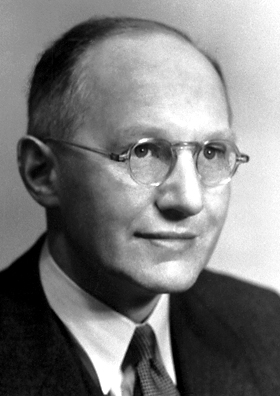
Just got word of this really interesting looking exhibition in Trinity's Long Room featuring Ernest Walton's Nobel medal. Here's an edited version of the press release...

TCD Exhibition Celebrates Nobel Laureate Dr Ernest Walton

Dublin,  Wednesday,  November 3rd, 2010 –  Physicist and  Nobel  Laureate  Ernest Walton is remembered in an exhibition which opens this week in the Long Room in Trinity College Dublin  where his Nobel citation and  medal along with personal and academic papers donated to Trinity will be on display for the first time.

Ernest Walton (1903-1995) was born in Dungarvan in County Waterford and was educated at the Methodist College in Belfast and entered Trinity College Dublin in 1922. He became a Scholar in 1923 and graduated in mathematics and physics in 1926. After a year’s postgraduate work in TCD, Walton went to study in the Cavendish Laboratory in Cambridge under the Nobel prize-winner Lord Ernest Rutherford. Working with John Cockcroft, he successfully split the nucleus of an atom in April 1932. They were subsequently jointly awarded the Nobel prize in 1951 for “their pioneering work on the transmutation of atomic nuclei by artificially accelerated atomic particles”. 

Provost Dr John Hegarty said that Trinity was deeply proud of its unique and lifelong association with one of Ireland’s greatest scientists.

‘The next two years mark significant anniversaries in relation to Ernest Walton and Science. 2011 will be the 60th anniversary of the award of the Nobel Prize to Ernest Walton and John Cockroft; 2012 will be the 80th anniversary of the seminal experiment by Cockroft and Walton in Cambridge which earned them the Nobel Prize. In 2012 Dublin will have the honour of being the European City of Science, an honour that Ernest as a champion of science education would be justly proud. The coincidence of all of these dates makes it very timely to begin a series of events to commemorate Ernest Walton, the scientist, the academic, and the proud Irishman.”

The exhibition will run from November to February 18th, 2011 in the Long Room, the Old Library, Trinity College.

Wednesday, August 18, 2010

Web video boom shown with cool graphics


Image Sources: Cisco estimates based on
CAIDA publications, Andrew Odlyzko
via Gizmodo via Wired

Video is taking over the web - but by how much exactly? This great infographic sums it up - that pink triangle on the right is the proportion of US internet traffic that's all online video. And the graphic shows how it's boomed since the year 2000.

One of the things I've noticed working at video production company Agtel is just how much people expect web video to be central on websites these days. Enterprise Ireland have just launched their new website and lots of high quality videos (produced by Agtel, by the way!) covering innovation and business are right there up front.

I'm a big fan of data visualisation techniques that show information we kind of know in a new and interesting way - for example, the US satellite images that showed the housing boom in Ireland as seen from space were really impressive.

Gizmodo updated their original story to include this extra bonus graph from Mr. Beschizza of BoingBoing too - basically because the diagram above is all above the proportion of web traffic that's video etc. but the actual amount of web traffic has shot up too. Maybe this would all make even more sense through 3D glasses?


Friday, July 23, 2010

"CSI Dublin" revealed in Sandyford Industrial Estate

[Picture credit: Kobukson via Gizmodo]

I've just read a really interesting report about Microsoft's CSI-style forensics lab - and it's right here in Dublin. 

Why would a software company need a forensics lab I hear you ask? Well, to beat dodgy counterfeiters of course. They're using advanced microscopy techniques to analyse fake software CDs and trace them back to the counterfeiters. Pretty cool, eh? Here's more detail on it:

At a crime lab in Dublin, Microsoft's Donal Keating uses a custom-built microscope to take 72 high-resolution images of a counterfeit software disc. Just as police use ballistics to match bullets to a suspect's gun, Keating, the company's senior forensics manager, will use the abrasions and grooves on the stacking ring, a raised ridge around the disc's center, to match it to other fakes. He'll then try to trace the counterfeit disc to the factory and the crime syndicate that produced it.

It's always great when Irish scientific and technology stories show up in surprising places - this story was first published in US Magazine Bloomberg Businessweek and then picked up by tech news site Gizmodo.

Friday, July 09, 2010

Astronauts thrown from helicopter (Spoiler: they knew it was going to happen)

I always thought that being an astronaut was meant to be fun... but it turns out that's not always the case. Unless you like being thrown out of a helicopter, that is.

The latest European Space Agency (ESA) recruits got a bit more than they bargained for when they were forced off a helicopter into the sea as part of their survival training. But it's not the kind of survival they'll be expected to do if they crash land on Mars - foraging for food there is not expected to be a very successful activity apparently. And there's no sea there either. Nope, it's more about what to do if they crash land coming back to earth and there's no McDonald's (or Supermacs for that matter) in sight.

See the ESA site for more insight into how these poor astronauts survived their summer holiday from hell...

Monday, June 21, 2010

Wow! Now that's a cool sunrise photo!

The guys on the International Space Station have a great view - and one of the perks of the job is the 16 sunrises they get to see everyday. This has got to be one of the coolest photos of one of them...


It was taken by astronaut Douglas H. Wheelock and he posted it up on Twitpic (and I saw it up on Gizmodo). He's since posted this even more amazing one of the "Southern Lights" up on Twitpic as well... not a bad way to show some scientific stuff in an interesting way!


Monday, March 22, 2010

Irish science communicators take over web

There's a great buzz around science communication in Ireland these days and it can be hard to keep up with everything. It's even hard to keep up with the on-line resources aimed at making it easier to keep up with everything.

LinkedIn is fast becoming a focus for active discussions and information sharing on a whole range of topics, and a new group has been set up on LinkedIn called "Science Communicators Ireland" that will help us all keep in touch with what's going on - including Irish funding opportunties from the Institute of Physics and the Wellcome Trust.

Between this group and the active Communicating STEM (Science Technology Engineering & Maths) forum and even the Facebook page for DCU Science Communication MSc people, it does feel like we're taking over the web. It's great that there's so much going on on-line, and all this means there's no better time for the 2010 Communicating STEM Conference which will take place in Armagh Planetarium on May 13th 2010 - the theme is "Communicating STEM - Make it Happen" - you can register on-line now.

Monday, March 15, 2010

Taoiseach shows Agtel video at Innovation event


I was delighted to be involved with the launch of the Innovation Taskforce report - and the video we produced for the event was a central part of An Taoiseach Brian Cowen's speech.

It features lots of interviews with the taskforce members and it was great to interview them and hear their opinions first hand. The important role of innovative science and technology startups is one of the key messages that comes across as well as the role of R&D by multinationals.

An opinion piece in the Irish Independent on Friday, 12 March 2010 gave the production a nice mention too:
"There was even a slick PR video, which had executives from companies like Facebook and Bell Laboratories saying nice things about what a great place Ireland was to do business in."
The video is now up on the Innovation Taskforce section of the Department of the Taoiseach's website ...

Thursday, February 11, 2010

EU e-Skills Week and Ireland

Engineers Week has been a big success and has gotten lots of media attention - and it's interesting to hear that it won't be long before the next Irish event that will focus people's minds on careers in the STEM area...

EU e-Skills week in Ireland, from 1st -5th March [is] aimed at encouraging students to think about taking science/maths/technology subjects and to explore careers in ICT and also creating links with ICT organizations.

EU e-Skills Week -1st -5th March 2010

EU e-Skills Week highlights the growing demand for skilled ICT users and professionals to drive a competitive and innovative Europe. This exciting campaign seeks to inform students, young professionals and SMEs about the vast range of opportunities that ICT-related jobs present.

The launch event ‘Smart Futures’ will take place on 1st March and we are looking for ICT professionals or Engineers who would be interested in attending to find out more about the ‘ICT Champions’ programme run by ICT Ireland and Engineers Ireland.

Details of EU e-Skills week - http://eskills-week.ec.europa.eu or contact katecannon@fit.ie for details of what is happening in Ireland.

Tuesday, February 02, 2010

Do Irish scientists need to fight climate change sceptics?


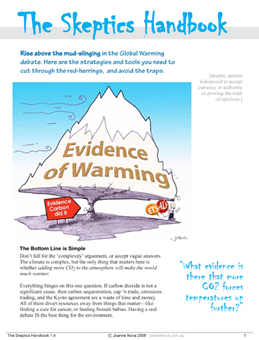
The climate change discussions in DCU on Friday were really interesting, and IPCC scientist John Sweeney's presentation was particularly thought provoking. He lifted the lid on the sometimes unsavoury working methods of the climate change sceptics who have been making the headlines recently - and issued a call to arms for scientists to get out and engage with their detractors before they lost they argument.


Coincidentally, Climategate is in the news in the Guardian again today, and the UK's Parliamentary Office of Science and Technology has issued a briefing note on “Climate Change: Engagement and Behaviour”. It makes for very interesting reading - including a critique of the mixed results of the communication campaigns run by the UK government.


Given the high profile role being played by UK climate secretary, Ed Miliband who featured in the Observer at the weekend, it'll be interesting to see what our own Green Party government ministers think of all this... Ministers John Gormley and Eamon Ryan have been been surprisingly quiet on these huge issues so far.


Monday, January 11, 2010

How do you tackle climate change sceptics?


I'm looking forward to the upcoming "Sustainability – where Science and Society meet" workshop in Dublin City University later this month on Friday, 29th January 2010.

I'm especially looking forward to the session by John Sweeney on "Communicating the science of climate change: tackling scepticism after Copenhagen". John is a professor at NUI Maynooth and a contributing author to the Intergovernmental Panel on Climate Change (IPCC) - it'll be really interesting to hear what he thinks about Climategate and to get an insight into the behind the scenes negotiations at Copenhagen / Hopenhagen last December.

There are lots of other interesting talks too in this workshop organised by the DCU Celsius research group as you'll see from the list below...

Sustainability and interdisciplinarity (John Barry, Institute for a
Sustainable World, Queens University Belfast)

Ethical dimensions of sustainability (Donal O Mathuna, School of Nursing,
DCU)

Promoting sustainability research (Shane Colgan, Environmental Protection
Agency)

Sustainability as a philosophical standpoint (Fiachra O Brolchain, DCU and
Queens University)

Food systems and sustainable development (Ciara Aucoin, VOICE of Irish
Concern for the Environment)

Social sustainability: the case of wind energy (Hilary Tovey, Dept of
Sociology, Trinity College Dublin)

Climate change and sustainability (Owen Lewis, Sustainable Energy Ireland)

Renewable energy research (Stephen Daniels, School of Electronic
Engineering, DCU)

Communicating the science of climate change: tackling scepticism after
Copenhagen (John Sweeney, NUI-Maynooth)

Sustainability-proofing in prospective technology assessment (Padraig
Murphy, School of Communications, DCU)

Technology assessment – is consensus possible in a pluralist society?
(Massimiano Bucchi, University of Trento, Italy)


Monday, January 04, 2010

Ireland's housing boom as seen from space


Ireland's housing boom can be seen clearly in this very impressive visualisation based on satellite images which I came across the other day:


This image shows the change in surface lights in Ireland between 1992 and 2008 - and the growth of towns dotted all over Ireland can be seen clearly in red, as well as the expanding motorway network (especially on the east coast between Dublin and Drogheda).

According to the image's creator Chris Elvidge at the US National Oceanic and Atmospheric Administration (NOAA) who has kindly given me permission to show it here...
The red and orange areas had large growth in lighting from 1992 to 2008. The black areas saturated the sensor in both years - no change in lighting can be detected. Gray - blue/gray areas had dim lighting detected in both years.
He goes on to explain that...
I made the image here using data from the DMSP archive. DMSP is the U.S. Air Force Defense Meteorological Satellite Program. These satellite carry an instrument called the Operational Linescan System (OLS), which collects low light imaging data at night for the detection of moonlit clouds.
I first saw this image in the January 2010 issue of the BBC Sky at Night magazine where they were talking about mapping "dark sky" areas which would make good spots for star gazing. As one of the many people who got a telescope for Christmas I've been reading the magazine for hints and tips - not a bad way to round off the International Year of Astronomy. But one mystery remains - I can't quite understand how Ireland has been historically strong in astronomy given the amount of cloudy nights we have here!


Tuesday, December 15, 2009

Career paths for PhD graduates


There's a lot of discussion about the career paths open to Irish PhD graduates - with some commentators arguing that there isn't actually much of a "path" available at all with people being forced into negative feedback loops of short term PostDoc contracts.

That's why this report that's just been released on PhDs going into business and industry is particularly interesting. It's been put together by the Advisory Council for Science, Technology and Innovation (ACSTI) - and some of their headline recommendations seem to make a lot of sense...
  • Structured PhD programmes should embody the “Inverted T” shaped model whereby they develop PhD students’ understanding of the discipline as well as in-depth knowledge of research approaches, techniques and methods which are critical to the value of PhDs for enterprise.
  • A user-friendly, centralised system should be developed to allow employers or potential employers to access information on the number of PhD students in the pipeline and the broad theme of the research
  • Ireland should develop an Enterprise PhD programme building on the model of the DanishIndustrial PhD programme whereby an employee earns a PhD based on research relevant to their company.
These suggestions - if implemented - wouldn't change much for people who have a PhD already, but for those who are about to embark on the rollercoaster that is postgraduate research they might just make the whole thing that little bit more worthwhile...

What do you think? E-mail me or comment to let me know...

Monday, December 14, 2009

Climategate, Hopenhagen and the Meedja


With the "Hopenhagen" climate change summit in full swing, and our own Minister John Gormley now in Copenhagen, I've found it really interesting to go through some of the leaked "Climategate" e-mails on-line.

They make pretty compelling reading if you're into that kind of thing, and there's a really strong editorial in SciDev.Net about the "Lessons about science from 'Climategate'" by David Dickson (Director of SciDev.Net). He argues that:

"The hacked emails of climate researchers offer an opportunity to show how science is really done — instead of a rearguard defence of scientific 'objectivity'."
... and he says ...
"The media, too, must improve its understanding and description of science. It often demands a black-and-white picture of scientific evidence, rather than a more nuanced description based on the social nature of scientific inquiry. This undervalues the true robustness of the scientific process and undermines the strength of political decisions based on conclusions emerging from it."